Introduction
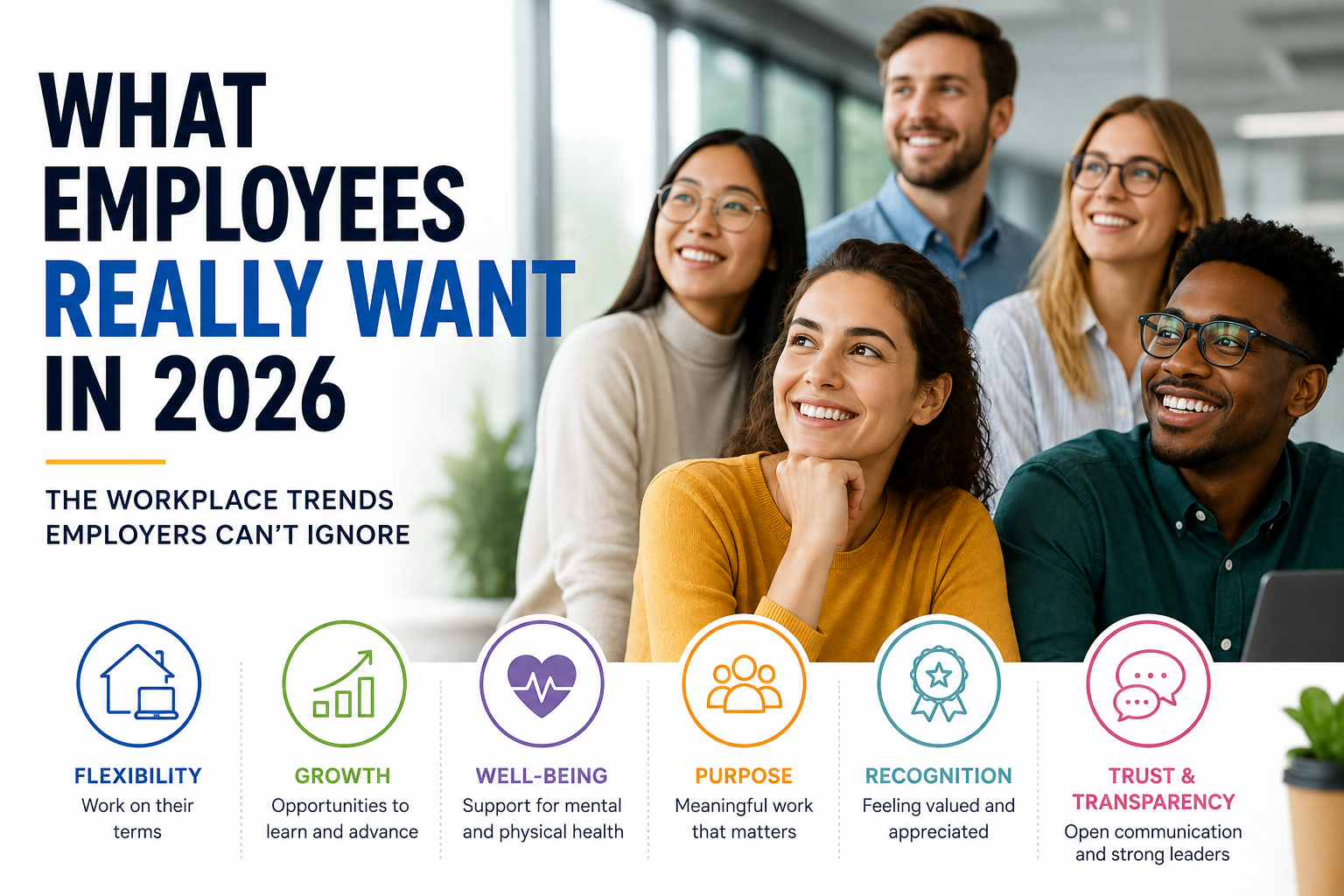
The workplace has changed dramatically over the past few years, and employee expectations continue to evolve. In 2026, competitive salaries alone are no longer enough to attract and retain top talent. Today’s workforce is looking for meaningful work, flexibility, career growth, and employers who genuinely care about their well-being.
Organizations that understand these changing workplace trends will have a significant advantage in attracting skilled professionals, reducing employee turnover, and building high-performing teams. Employers who fail to adapt may find themselves struggling to recruit and retain the talent needed for long-term success.
So, what do employees really want in 2026?
1. Flexible Work Arrangements
Flexibility remains one of the most sought-after workplace benefits. Employees want the freedom to work in ways that allow them to balance professional responsibilities with personal commitments.
Whether it’s remote work, hybrid schedules, flexible hours, or compressed workweeks, employees increasingly value employers who trust them to manage their time effectively.
Companies that offer workplace flexibility often experience higher employee satisfaction, improved productivity, and stronger retention rates.
2. Meaningful Career Growth Opportunities
Employees are no longer content with staying in the same role for years without advancement. They want clear career paths, continuous learning opportunities, and access to professional development programs.
Organizations that invest in employee training, leadership development, mentorship programs, and skill-building initiatives are more likely to retain ambitious professionals seeking long-term growth.
Career progression is no longer a bonus—it’s an expectation.
3. Competitive Compensation and Benefits
While purpose and flexibility matter, compensation still plays a major role in employee satisfaction.
Workers want fair pay that reflects their skills, experience, and contributions. Beyond salary, employees are increasingly interested in comprehensive benefits packages that include:
- Health and wellness programs
- Retirement plans
- Paid time off
- Mental health support
- Family-friendly benefits
- Professional development allowances
Employers who regularly review compensation structures are better positioned to remain competitive in the talent market.
4. Mental Health and Employee Well-Being
Workplace well-being has become a critical priority.
Employees want organizations that acknowledge the importance of mental health and actively support work-life balance. Burnout remains a significant concern across industries, making employee wellness programs more important than ever.
Employers can support well-being by:
- Encouraging reasonable workloads
- Promoting healthy work-life boundaries
- Offering mental health resources
- Providing employee assistance programs
- Creating psychologically safe workplaces
A healthy workforce is a productive workforce.
5. Strong Leadership and Transparent Communication
Employees want leaders they can trust.
Transparency, honesty, and consistent communication are becoming essential components of effective leadership. Workers want to understand company goals, business challenges, and how their contributions impact organizational success.
Leaders who communicate openly and involve employees in decision-making processes often foster stronger engagement and loyalty.
Trust is quickly becoming one of the most valuable workplace currencies.
6. Diversity, Equity, and Inclusion
Today’s workforce expects employers to create inclusive environments where everyone feels respected, valued, and heard.
Employees want organizations that actively promote diversity, provide equal opportunities, and foster a culture of belonging.
Companies that prioritize diversity and inclusion often benefit from improved innovation, stronger collaboration, and enhanced employer branding.
7. Recognition and Appreciation
Employees want their efforts to be acknowledged.
Regular recognition helps people feel valued and motivated. Appreciation doesn’t always require financial rewards—sometimes a simple thank-you, public recognition, or celebrating achievements can significantly improve morale.
Organizations that build cultures of recognition often see higher engagement and stronger team performance.
8. Purpose-Driven Work
Many employees, especially younger generations, want to work for organizations whose values align with their own.
They want to know that their work contributes to something meaningful beyond profits. Companies that clearly communicate their mission, social impact, and values are more likely to attract purpose-driven professionals.
Employees increasingly seek employers that stand for something bigger than business.
Conclusion
The future of work in 2026 is employee-centered. Today’s professionals are looking beyond salary and seeking workplaces that offer flexibility, growth opportunities, well-being support, strong leadership, recognition, and meaningful work.
Employers who adapt to these workplace trends will not only attract top talent but also build loyal, engaged, and high-performing teams. Understanding what employees truly want is no longer optional—it’s a strategic necessity for business success in the modern workforce.
Follow the Padyem TalentLab channel on WhatsApp for more updates and learning opportunities https://whatsapp.com/channel/0029VbCnUvKLCoX0Xy7dDI1C