
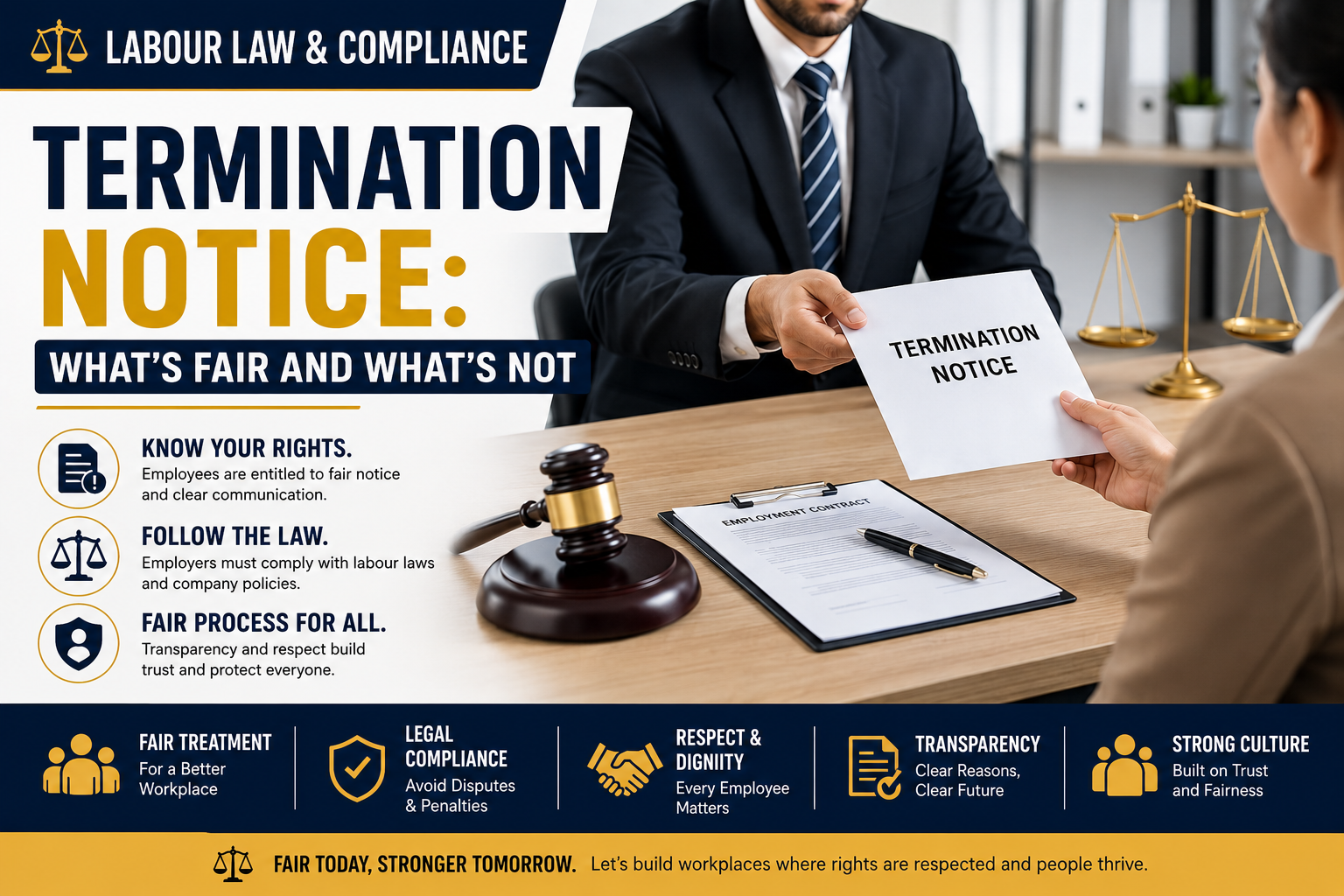
Introduction
Losing a job can be emotional, stressful, and confusing — especially when employees are not properly informed of their rights. Many employers also make mistakes during termination because they don’t fully understand labour laws and compliance procedures. A fair termination process protects both the company and the employee. Understanding what is acceptable and what crosses the line is important in every workplace.
1. Employees Deserve Proper Notice
A company should never terminate an employee suddenly without proper communication, except in cases involving serious misconduct. Employees deserve enough time to prepare financially and emotionally for the transition. A proper notice period shows professionalism and respect.
Why It Matters:
Gives employees time to adjust
Builds trust in the workplace
Prevents legal disputes
Protects company reputation
2. Unfair Dismissal Can Lead to Legal Problems
Terminating an employee without valid reasons or documentation can create serious legal consequences for employers. Labour laws exist to prevent discrimination, revenge firing, or abuse of power in the workplace.
Examples of Unfair Termination:
- Firing someone without explanation
- Discrimination based on gender, age, or religion
- Retaliation after complaints
- Ignoring employment contracts
Key Reminder:
Documentation and transparency are essential.
3. Communication Should Always Be Professional
How a termination is handled matters just as much as the decision itself. Public embarrassment, rude treatment, or poor communication can damage morale within the company and affect the employer’s image.
Best Practices:
- Hold private meetings
- Speak respectfully
- Explain reasons clearly
- Avoid emotional confrontations
Professionalism leaves dignity intact.
4. Final Payments and Benefits Must Be Clear
Employees should understand what they are entitled to after termination. Outstanding salaries, unused leave, bonuses, or severance pay should be communicated properly and processed on time.
Employers Should Clarify:
- Final salary date
- Severance packages
- Unused leave payments
- Benefit continuation policies
Clear communication reduces confusion and conflict.
5. A Fair Exit Process Protects Everyone
A structured and lawful exit process helps companies avoid unnecessary problems while helping employees leave respectfully. Fair treatment creates a healthier work culture and shows ethical leadership.
A Good Exit Process Includes:
- Written termination notice
- HR documentation
- Return of company property
- Exit interview if necessary
Fairness should always remain a priority.
Conclusion
Termination is never easy, but fairness, professionalism, and compliance make a major difference. Employees should know their rights, while employers should ensure their actions follow labour laws and ethical standards. Respectful handling of termination situations protects workplace relationships, company reputation, and legal safety for everyone involved.
Follow the Padyem TalentLab channel on WhatsApp for more updates and learning opportunities https://whatsapp.com/channel/0029VbCnUvKLCoX0Xy7dDI1C