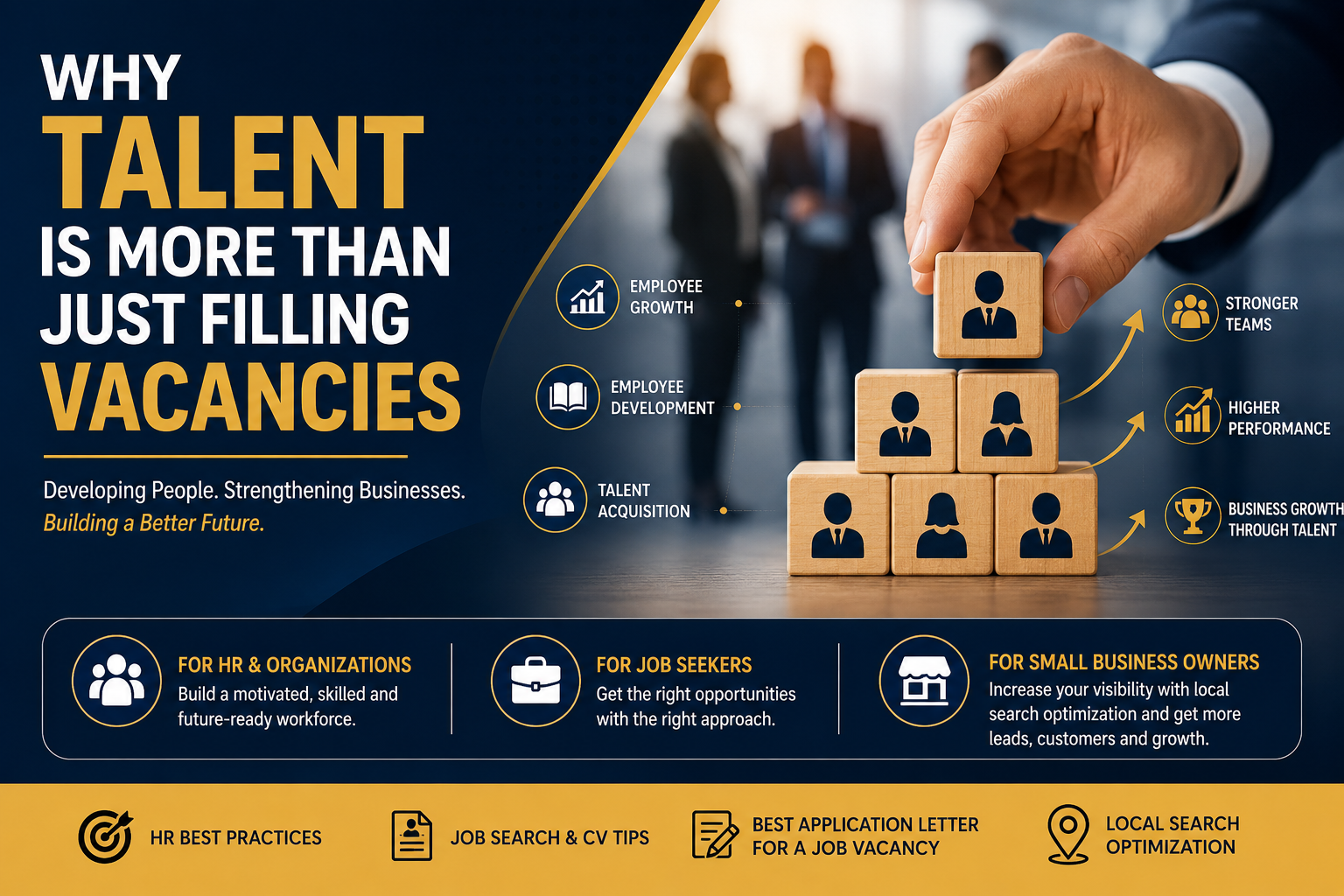
In today’s competitive business environment, many organizations still view hiring as a simple process of filling vacant positions. However, successful companies understand that talent is much more than just filling vacancies. Talent represents the people, skills, potential, and leadership that drive innovation, growth, and long-term success.
At our HR company, we believe that talent development goes beyond recruitment. Whether you’re an HR professional looking to build a stronger workforce, a job seeker searching for career opportunities, or a small business owner striving to grow your company, understanding the true value of talent can transform your future.
What Does Talent Really Mean?
Talent is not simply finding someone to occupy an empty desk.
True talent includes:
- Skills and expertise
- Growth potential
- Leadership capabilities
- Problem-solving abilities
- Cultural fit
- Adaptability to change
- Commitment to organizational goals
Organizations that focus solely on filling vacancies often miss the opportunity to build teams capable of driving sustainable growth.
The most successful businesses understand that every hire is an investment in the future of the organization.
Why Talent Is More Than Just Filling Vacancies
Recruitment is important, but it is only one piece of the puzzle.
A strong talent strategy focuses on:
Employee Growth
Employees want more than a paycheck. They want opportunities to learn, improve, and advance in their careers.
When organizations prioritize employee growth, they create a workforce that is motivated, productive, and loyal.
Benefits of employee growth include:
- Higher retention rates
- Increased productivity
- Stronger leadership pipelines
- Improved employee satisfaction
- Better organizational performance
Companies that invest in their people often outperform competitors that focus only on hiring.
Employee Development
Employee development is the process of helping workers build new skills and improve existing ones.
This may include:
- Professional training
- Mentorship programs
- Leadership development
- Career coaching
- Performance improvement plans
Employee development helps organizations prepare for future challenges while ensuring employees remain engaged and motivated.
Rather than constantly replacing workers, businesses can develop talent internally and reduce recruitment costs.
The Role of HR in Talent Development
Modern HR professionals are no longer just recruiters.
Today’s HR departments play a strategic role in:
- Talent acquisition
- Workforce planning
- Employee engagement
- Leadership development
- Performance management
- Organizational culture
Following HR best practices allows companies to create environments where employees can thrive.
HR Best Practices for Talent Management
Effective HR strategies include:
1. Hiring for Potential
Skills can be taught. Character, attitude, and adaptability are often more difficult to develop.
Great HR teams look beyond resumes and identify candidates with long-term potential.
2. Creating Clear Career Paths
Employees stay longer when they can see a future within the organization.
Provide opportunities for advancement and professional growth.
3. Investing in Continuous Learning
Organizations should encourage lifelong learning through workshops, certifications, and professional development programs.
4. Recognizing Employee Contributions
Recognition increases morale and strengthens employee commitment.
Even simple acknowledgments can significantly improve workplace engagement.
5. Building Inclusive Workplace Cultures
Employees perform better when they feel valued and respected.
An inclusive workplace attracts top talent and improves retention rates.
Talent Acquisition: Finding the Right People
Talent acquisition is often confused with recruitment, but they are not the same.
Recruitment focuses on filling immediate vacancies.
Talent acquisition is a long-term strategy designed to identify, attract, and retain top performers.
Effective talent acquisition involves:
- Employer branding
- Candidate relationship management
- Workforce planning
- Succession planning
- Strategic hiring initiatives
Organizations that adopt talent acquisition strategies position themselves for future success.
Job Search and CV Tips for Modern Professionals
For job seekers, understanding talent development can improve your career prospects.
Employers are increasingly looking for candidates who demonstrate potential, adaptability, and a willingness to learn.
Job Search and CV Tips
Customize Your CV
Avoid sending the same CV to every employer.
Tailor your CV to match the job description and highlight relevant achievements.
Focus on Results
Employers want evidence of impact.
Instead of saying:
“Managed social media accounts.”
Say:
“Increased social media engagement by 45% within six months.”
Highlight Transferable Skills
Skills such as communication, leadership, teamwork, and problem-solving are valuable across industries.
Continue Learning
Employers appreciate candidates who invest in their own development.
Online courses, certifications, and professional training can strengthen your profile.
Build a Professional Online Presence
Platforms such as LinkedIn allow recruiters to discover your skills and experience.
Maintain an updated profile and engage with industry content regularly.
How to Write the Best Application Letter for a Job Vacancy
Many candidates underestimate the importance of a strong application letter.
The best application letter for a job vacancy should:
Start with a Strong Introduction
Introduce yourself clearly and explain why you are interested in the position.
Demonstrate Value
Show how your skills and experiences align with the employer’s needs.
Highlight Achievements
Use specific examples that demonstrate your ability to deliver results.
Show Enthusiasm
Employers prefer candidates who genuinely want to contribute to their organization.
End Professionally
Express appreciation and indicate your interest in discussing the opportunity further.
A well-written application letter can significantly improve your chances of securing an interview.
Why Small Business Owners Must Focus on Talent
Many small business owners believe talent management is only necessary for large corporations.
This is a costly mistake.
For small businesses, every employee has a significant impact on success.
A single exceptional employee can:
- Improve customer service
- Increase sales
- Enhance productivity
- Strengthen company culture
- Generate innovative ideas
Likewise, poor hiring decisions can create serious challenges.
Small business owners should view talent as a growth strategy rather than an expense.
Local Search Optimization: Helping Small Businesses Grow
Talent is not the only factor that drives success.
Visibility matters too.
Many small business owners struggle because potential customers cannot find them online.
This is where local search optimization becomes essential.
Local search optimization helps businesses appear in search results when customers look for products or services nearby.
Examples include:
- “HR company near me”
- “Recruitment agency in Lagos”
- “CV writing services near me”
- “Business consultant near me”
Benefits of Local Search Optimization
Increased Visibility
Higher search rankings mean more people discover your business.
More Qualified Leads
Local search attracts customers actively looking for your services.
Better Conversion Rates
Local searches often result in immediate action.
Stronger Brand Authority
Appearing on the first page of Google builds trust and credibility.
For small business owners, combining strong talent strategies with local search optimization creates a powerful foundation for growth.
Business Growth Through Talent
One of the biggest misconceptions in business is that growth comes primarily from products, technology, or marketing.
In reality, business growth through talent is often the deciding factor.
Talented employees:
- Solve problems faster
- Deliver better customer experiences
- Improve operational efficiency
- Generate innovative solutions
- Drive revenue growth
Organizations that prioritize business growth through talent consistently outperform those that focus only on short-term hiring needs.
How Talent Drives Business Growth
Innovation
Talented individuals bring fresh ideas and creative solutions.
Customer Satisfaction
Engaged employees create better customer experiences.
Operational Excellence
Skilled workers improve efficiency and productivity.
Leadership Development
Future leaders emerge through deliberate development efforts.
Competitive Advantage
Strong talent enables businesses to adapt quickly to market changes.
Our Philosophy on Talent Development
At our HR company, we believe that people are the foundation of every successful organization.
We do not simply help companies fill vacancies.
We help businesses build stronger teams.
We help job seekers unlock career opportunities.
We help small business owners grow through strategic hiring, employee development, and local search optimization.
Our philosophy is simple:
Invest in people, and success follows.
Talent is not a short-term solution.
Talent is a long-term growth strategy.
Conclusion
Talent is far more than filling vacancies.
For HR professionals, it means creating systems that support employee growth and employee development.
For job seekers, it means continuously improving skills and positioning yourself as a valuable contributor.
For small business owners, it means investing in people while improving visibility through local search optimization.
Organizations that embrace talent acquisition, follow HR best practices, and prioritize business growth through talent create sustainable success in an increasingly competitive world.
The future belongs to businesses that recognize one simple truth:
Vacancies can be filled in a day, but talent development creates value for years.
Follow the Padyem TalentLab channel on WhatsApp for more updates and learning opportunities https://whatsapp.com/channel/0029VbCnUvKLCoX0Xy7dDI1C